MBTI Test
In conversations these days, the topic of MBTI is almost impossible to leave out. People use it as an icebreaker with strangers, and close friends often compare their types as a way to discuss personalities. This article explores what the MBTI test is and how it can be put to good use.
In conversations these days, the topic of MBTI is almost impossible to leave out. It is commonly used as an icebreaker with people we have just met, and close friends often compare their types to talk about each other's personalities. This article takes a closer look at what the MBTI test is and how it can best be used.
Overview

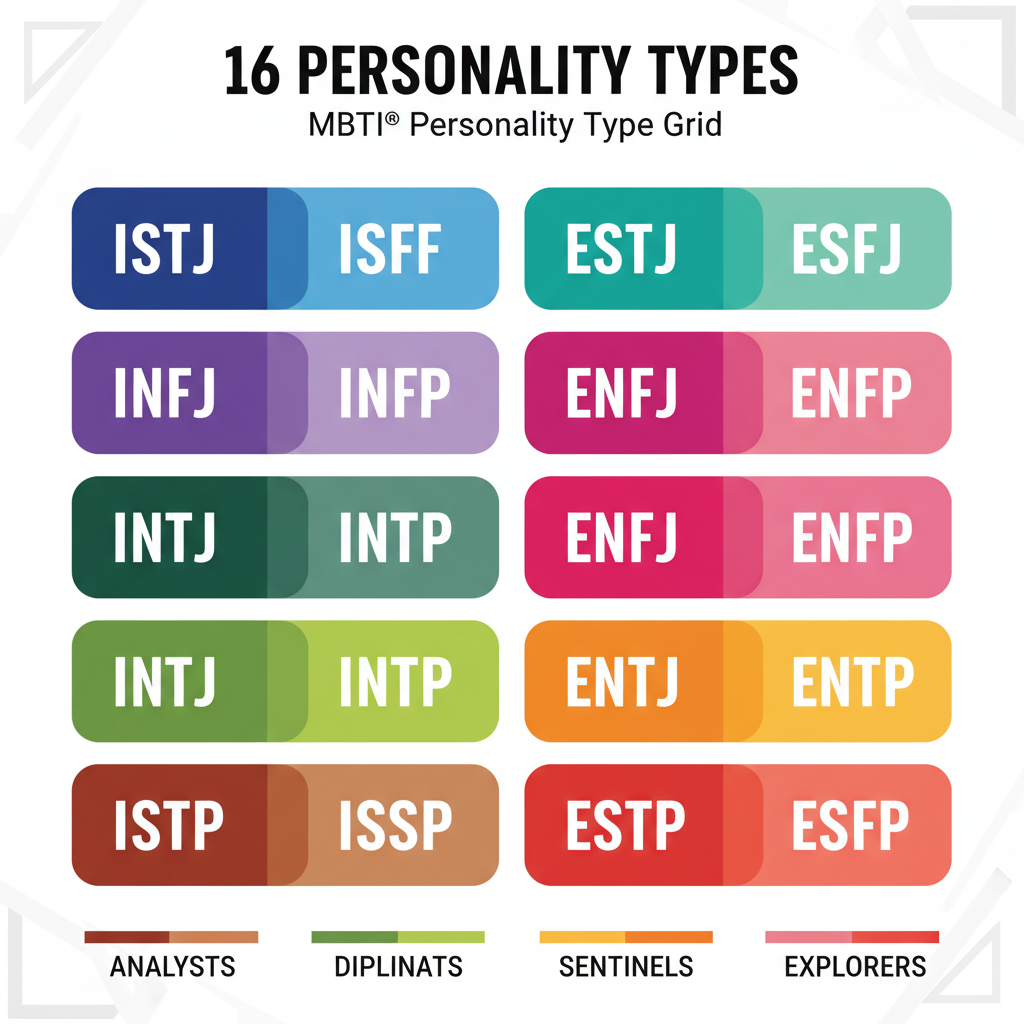
MBTI stands for Myers-Briggs Type Indicator, a personality type assessment tool. The test is based on the psychological type theory of psychiatrist Carl Jung and was developed by the mother-daughter duo Katharine Briggs and Isabel Myers as a way to classify personality types. It is now recognized as one of the most widely used personality assessments in the world. The MBTI is built around four preference dimensions. The first is the energy orientation, represented by Extraversion (E) and Introversion (I). The second is the perception function, represented by Sensing (S) and Intuition (N). The third is the judging function, represented by Thinking (T) and Feeling (F). Finally, the fourth is the lifestyle orientation, represented by Judging (J) and Perceiving (P). The combination of these four dimensions produces a total of 16 personality types.
Detailed Description

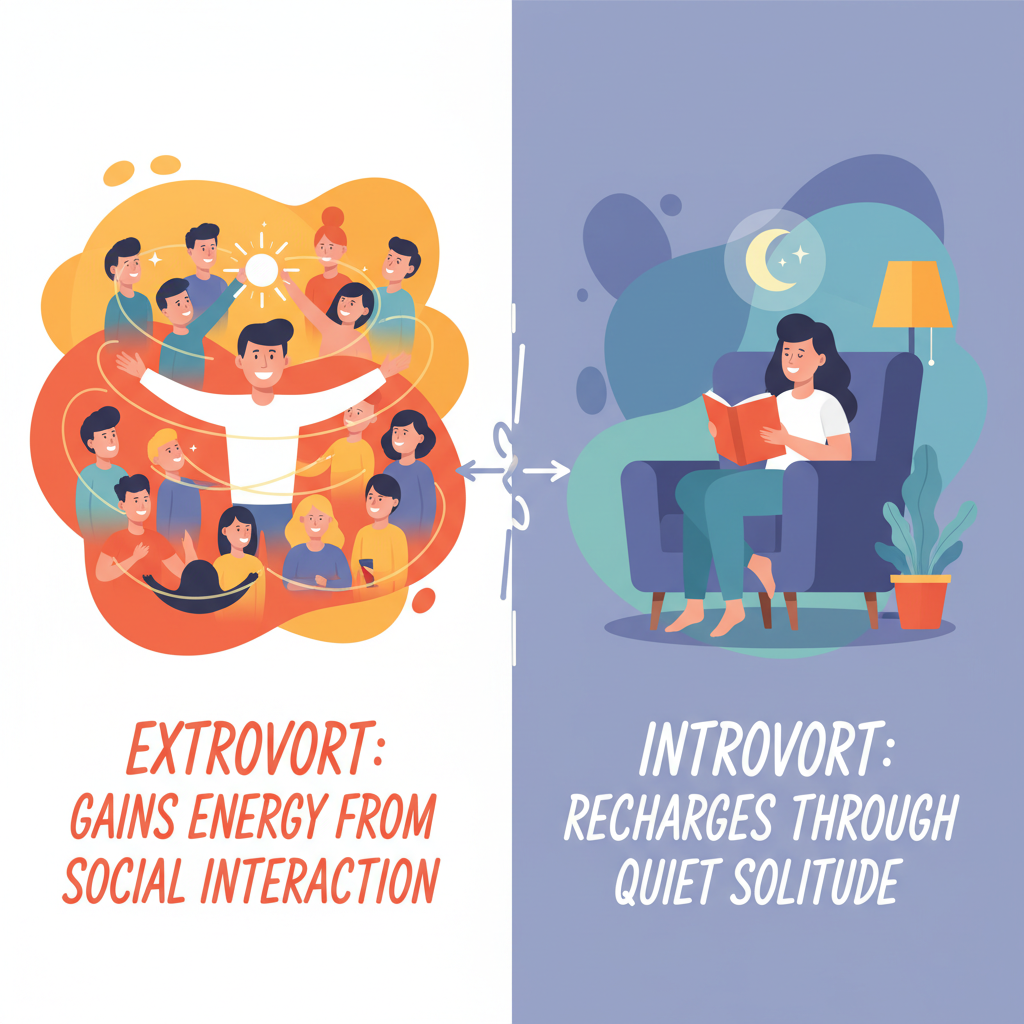
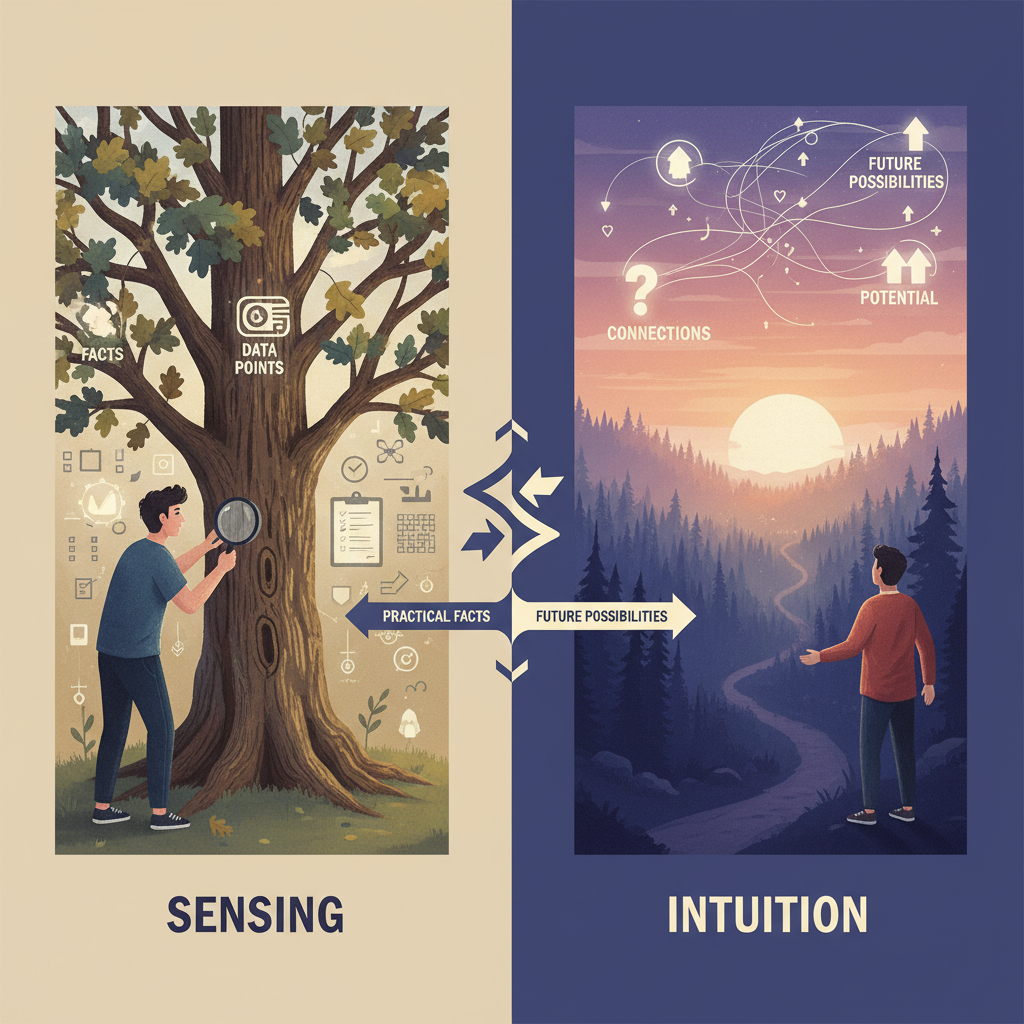
For example, types such as ISTJ, ENFP, INTJ, and ESFP are distinguished, and each type is associated with its own unique personality traits and behavioral patterns. Through this type classification, individuals can gain a more objective understanding of their own personality. Extraverts (E) tend to gain energy from being around other people, while Introverts (I) recharge through time spent alone. Extraverts tend to talk through their thoughts out loud, whereas Introverts typically organize their thinking internally before speaking. Sensing types (S) focus on present realities and concrete experiences, preferring specific and practical information. Intuitive types (N), on the other hand, are drawn to future possibilities and underlying meanings, favoring abstract and conceptual thinking. A common metaphor is that Sensing types see the individual trees while Intuitive types see the forest as a whole.
How to Use It
Thinking types (T) make decisions based on logic and objective analysis, while Feeling types (F) tend to prioritize relationships and personal values in their judgments. Thinking types evaluate situations in terms of right and wrong, whereas Feeling types are more guided by what feels good or bad. Judging types (J) prefer a planned and structured lifestyle and tend to handle tasks ahead of time. Perceiving types (P), in contrast, enjoy a flexible and spontaneous way of living, adapting fluidly to changing circumstances. Judging types typically finish their work well before deadlines, while Perceiving types often find their focus sharpens right as the deadline approaches. There are several ways to take the MBTI assessment. The most accurate method is to take it through an official institution, such as the Korea MBTI Institute, with professional interpretation included.
Additional Information
While many free MBTI tests are available online, their accuracy may be lower than that of the official assessment, so they are best used as a general reference. The official MBTI consists of 93 questions and takes approximately 20 to 30 minutes to complete. There are no right or wrong answers; you simply choose the option that best reflects how you typically behave. Answering honestly is the most important factor in obtaining an accurate result. Once you receive your results, it is worthwhile to go beyond the four letters and study the meaning of each dimension in depth. Doing so can help you identify your strengths and weaknesses and understand what kinds of situations tend to cause you stress. This self-knowledge can then serve as a foundation for setting a direction for personal growth.
In-Depth Content
MBTI is also widely used as a tool for career exploration. Each personality type tends to be well-suited to certain career fields, and people generally feel greater satisfaction and fulfillment when they work in roles that align with their natural tendencies. For instance, ISTJs are often a strong fit for structured roles such as accounting or public administration, while ENFPs tend to thrive in fields that call for creativity and communication, such as marketing or counseling. In personal relationships, understanding someone's MBTI type can be a great help. Knowing another person's type makes it easier to understand why they behave the way they do, which can help reduce unnecessary conflict. Sharing MBTI types in romantic relationships or team projects, in particular, can lead to more effective communication and collaboration.
Things to Keep in Mind

However, MBTI results should not be treated as an absolute measure of personality. Personality is not fixed; it can shift with changing environments and life experiences, and MBTI is ultimately just one reference tool among many. It is important to remember that categorizing people into only 16 types has its inherent limitations. Even within the same MBTI type, individual differences exist. For example, two people who are both INFPs may differ in how strongly they lean toward Introversion: one might sit near the I-E boundary, while another may show a clear and pronounced preference for Introversion. Because the degree of preference for each dimension varies, people of the same type can still have noticeably different personalities in practice. It can also be worthwhile to retake the MBTI after some time has passed. As people age and accumulate new experiences, their personalities can evolve, and the results may differ from an earlier assessment. This is especially common when comparing results taken during adolescence with those taken in adulthood.
More Information

Free online MBTI tests have the advantage of being quick and easy to take. Sites like 16Personalities offer assessments in Korean and provide detailed explanations of your results. That said, these free tests may use different algorithms from the official MBTI, so it is best to treat them as a supplementary reference rather than a definitive assessment. People who are new to MBTI often find themselves excited after discovering their type and become curious about the types of those around them. Gathering with friends to share and compare types, then seeing how well the descriptions match, can be a genuinely entertaining activity. It can also become an opportunity to understand one another on a deeper level. MBTI has also become increasingly common in corporate settings. During new employee training or team-building activities, organizations may assess the personality types of their members and use that information to form effective teams and distribute tasks strategically. By leveraging the distinct strengths of different personality types, teams can achieve greater synergy.
Practical Applications

MBTI is also used in schools during career counseling sessions. It helps students understand their own personality traits and explore career paths that suit them. High school students in particular may find it beneficial to consider their MBTI type alongside their natural aptitudes when choosing a college major. MBTI can serve as a starting point for self-understanding. It offers an objective way to reflect on what kinds of situations give you energy, how you tend to process information, and how you typically make decisions. This kind of self-awareness can be an important foundation for personal growth and development.
Conclusion

In conclusion, the MBTI test is a useful tool for understanding yourself and others. However, it should not be used as an absolute standard for judging people, and it is best approached as a reference rather than a definitive verdict. Knowing your personality type and using that knowledge constructively can be a genuine help in living a more fulfilling life. As interest in MBTI has grown, a wealth of related content has emerged alongside it. Social media is full of memes and webtoons that playfully capture the characteristics of each type, making it easy to find content that resonates. Browsing this kind of content can be a fun way to relate to your own type and broaden your understanding of others. When taking the MBTI, be careful not to answer based on the person you wish you were rather than who you actually are. Accurate results come from answering honestly based on how you typically behave in everyday life, not on an idealized self-image. Genuine self-reflection is key.
Final Thoughts

Finally, it is worth remembering that MBTI is simply one way of understanding people and fostering communication. Differences in personality type do not mean incompatibility; in fact, diversity across types can enrich relationships and make them more dynamic. It is our hope that MBTI becomes an opportunity for you to know yourself better and to develop a deeper respect for others. If you have not yet taken the MBTI test, now is a great time to give it a try. It can be a fascinating experience that reveals new things about yourself, and it may bring positive changes to your relationships with the people around you. May the MBTI serve as an opportunity for greater self-understanding and personal growth.
Key Checks First
In conversations these days, the topic of MBTI is almost impossible to leave out. People use it as an icebreaker with strangers, and close friends often compare their types as a way to discuss personalities. This article explores what the MBTI test is and how it can be put to good use. Readers looking for MBTI Test usually need both the immediate steps and a fallback path when something fails. Use the checklist below before changing an account setting, submitting a request, or relying on a third-party guide.
Before You Start
| Item | What to check |
|---|---|
| Official channel | App, website, customer center, government site, or service portal |
| Verification | Login, phone verification, certificate, or two-factor authentication |
| Timing | Instant change, same-day processing, or business-day delay |
| Cost | Fee, auto-renewal, refund window, or cancellation condition |
| Records | Confirmation number, screenshot, email, or text message receipt |
Troubleshooting Order
- Recheck the current official app or website before following an old screenshot.
- If the menu name has changed, search inside the service with the core keyword.
- For verification errors, update the app, clear browser cache, and try another browser.
- For payment, refund, cancellation, or account deletion, save the completion screen.
- If support is needed, include the date, payment method, device, and exact error message.
Important Notes
Convenience services often change menu names, verification flows, and refund rules. Treat old screenshots as references, not final instructions. For irreversible actions such as cancellation, refund requests, account deletion, or official applications, confirm the current policy before pressing the final button.
For related everyday guides, browse the tips list. If the topic involves money, fees, interest, or taxes, the calculator hub can help with follow-up math. For policy or market updates, check the news section.
Frequently Asked Questions
Which should I follow if the app and website show different steps?
Use the current official screen for the service you are logged into. For payments, refunds, and cancellations, also check the latest terms or customer-center notice before final confirmation.
What should I do if verification keeps failing?
Update the app, try a different browser, clear cache, and retry phone or identity verification. If the same error repeats, save the message and contact support with the exact time and device.
What proof should I keep after completing the process?
Keep the confirmation number, completion screen, email, text message, and payment or cancellation record. These records help if you need to prove the request later.
Are older guides still reliable?
They can explain the general idea, but the current official page should be treated as the source of truth. Menu names and policies change, so confirm the latest screen before acting.
Additional Tips
- Consult a professional for accurate information
- For more details, please contact the relevant institution
Time calculators to use next
Continue with calculators for h:m:s arithmetic, work hours, sleep planning, presentation timing, and world time.
Apply this to your portfolio
Calculate the optimal weights with the rebalancing calculator
Go to Rebalancing CalculatorHave any questions?