What Is a Cartel?
You have likely come across the word "cartel" in the news or economic articles. It frequently appears whenever price-fixing or collusion issues arise among businesses or oil-producing nations, yet many people are unsure exactly what a cartel is or why it is problematic.
You have likely come across the word "cartel" in the news or economic articles. It frequently appears whenever price-fixing or collusion issues arise among businesses or oil-producing nations. Yet many people are not entirely sure what a cartel is, or why it is considered a problem.
Key Points

A cartel refers to an arrangement in which companies within the same industry agree in advance on prices, production volumes, or sales territories rather than competing freely with one another. In simple terms, it is an illegal practice in which multiple companies collude to raise prices or control supply. The term is believed to derive from the German word "Kartell," which originally carried the neutral meaning of a business alliance or agreement. Over time, however, it has come to carry an almost exclusively negative connotation and is now regarded as an unfair trade practice that restricts market competition. Cartels are generally categorized as price cartels, output cartels, or market-division cartels. A price cartel occurs when competing firms agree to set identical prices.
Detailed Explanation

An output cartel limits production in order to control supply. A market-division cartel involves each firm dividing up sales territories or customer segments, with a mutual agreement not to encroach on one another's domain. All of these forms ultimately harm consumers and block free market competition. One of the most well-known cartel examples is OPEC, the Organization of the Petroleum Exporting Countries. OPEC is an organization in which oil-producing nations gather to regulate crude oil output and influence prices, exercising enormous sway over global oil prices. Numerous cartel cases have also been uncovered domestically.
How to Apply This Knowledge

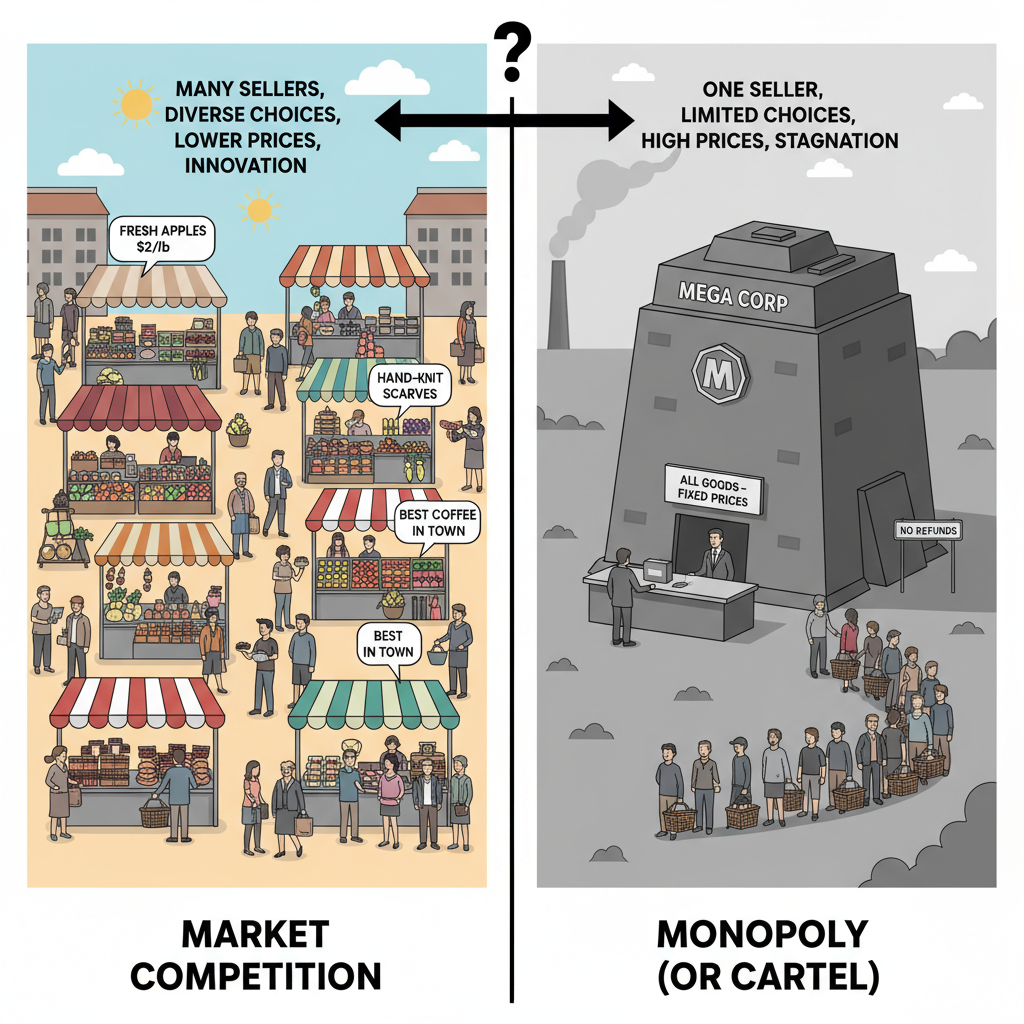
Notable domestic examples include price-fixing among instant noodle manufacturers, rate collusion among mobile telecommunications carriers, and flour price collusion among milling companies. These companies received substantial fines from the Korea Fair Trade Commission. Cartels tend to form because companies seek to prevent profit erosion from excessive competition and secure stable returns. They are especially likely to emerge in oligopolistic markets where entry barriers are high and a small number of firms dominate the industry. However, cartels are known to cause significant harm to consumers. When prices are artificially inflated, consumers must pay more and their range of choices narrows.
Additional Information

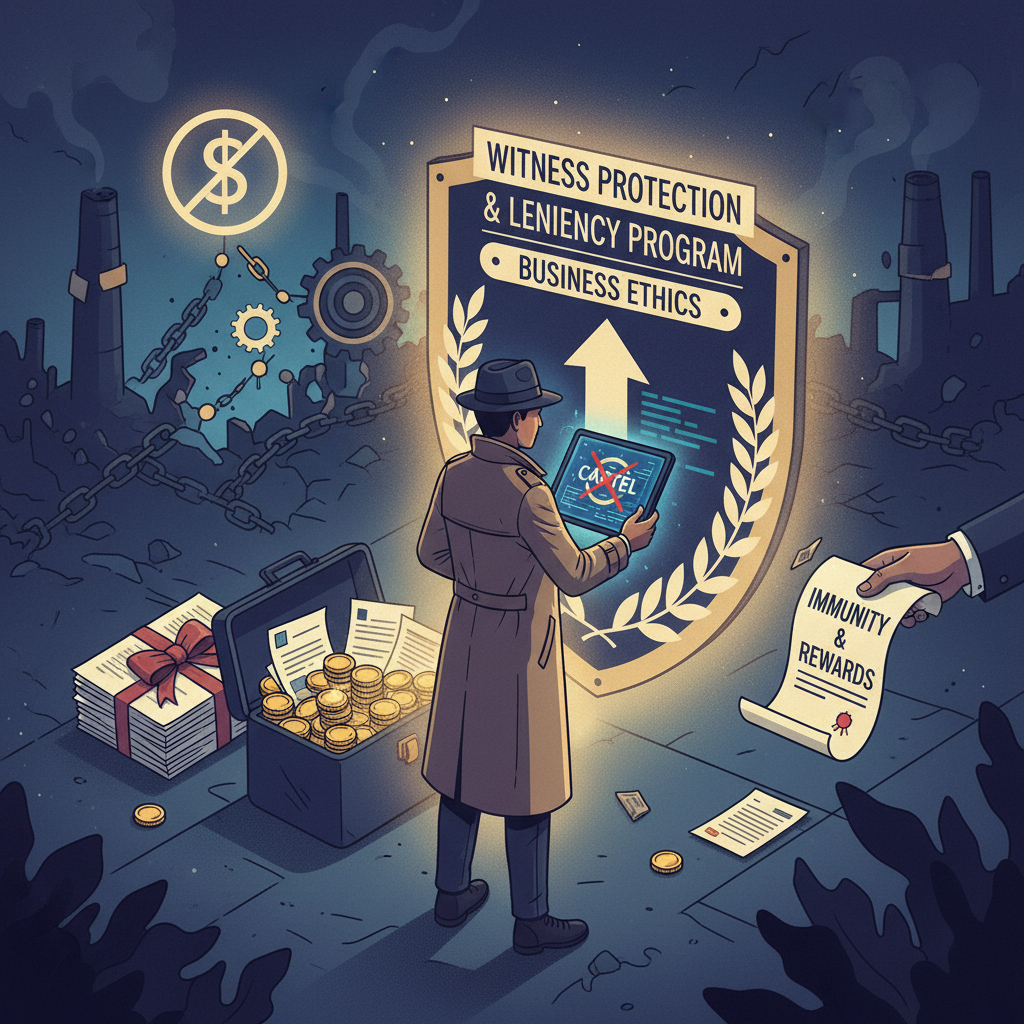
Moreover, when companies no longer feel pressure to invest in technology development or service improvements, the growth of entire industries can be stifled. From an economic perspective, cartels are considered a form of market failure. In a perfectly competitive market, prices are determined by the forces of supply and demand; when a cartel intervenes, this mechanism is distorted and inefficiency results. Cartels are illegal in most countries. In South Korea, the Fair Trade Act prohibits unfair joint conduct, and violators may face surcharges amounting to a percentage of their revenues as well as criminal penalties. To detect cartels, the Korea Fair Trade Commission operates a leniency program.
In-Depth Content
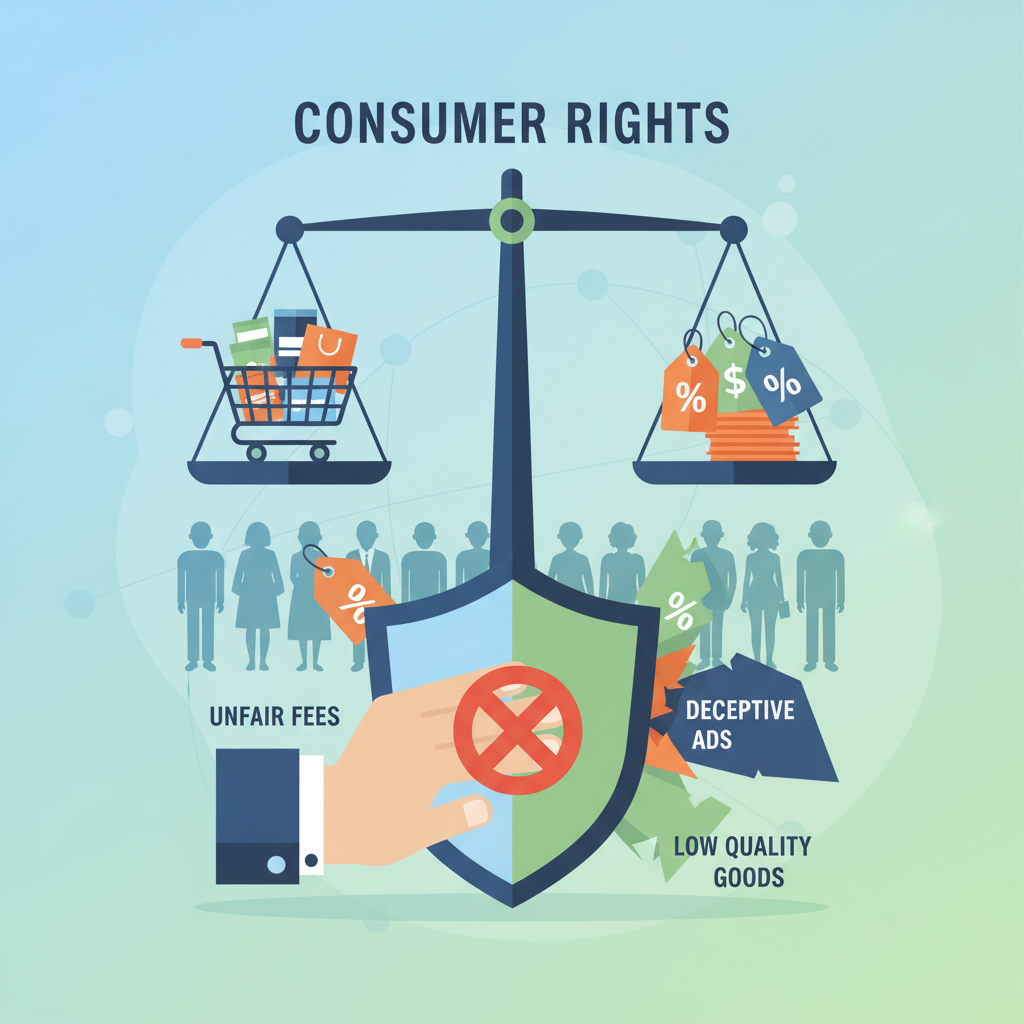
Under this leniency system, a company that participated in a cartel and voluntarily comes forward can receive a reduction or full exemption from fines, making it an effective tool for breaking up cartels. Cartel regulation is also intensifying at the international level. The European Union and the United States impose strict penalties even for cross-border international cartels, and cooperation among competition authorities in different countries is increasingly active. Related but distinct concepts include trusts and syndicates. A trust involves multiple companies merging to form a single large enterprise, while a syndicate is an arrangement in which only the sales function is operated jointly.
Notes and Considerations
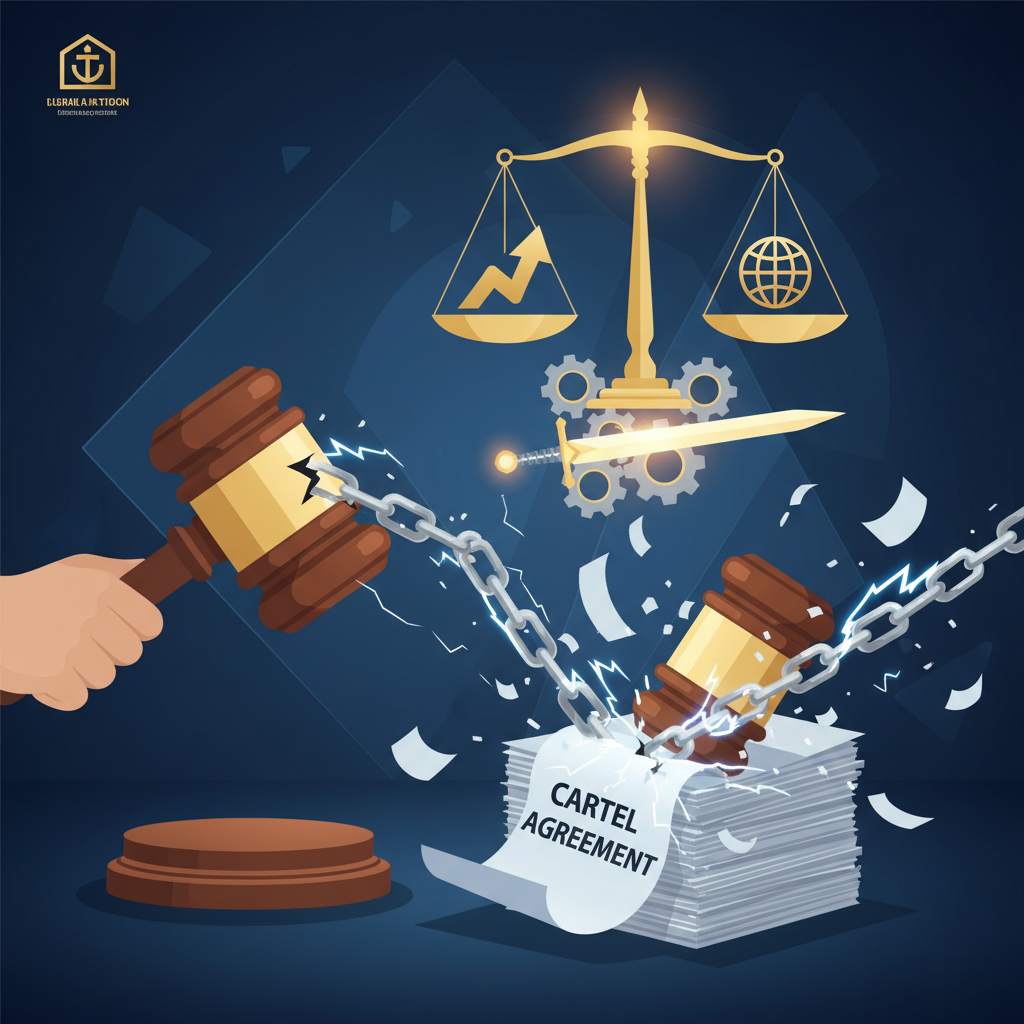
In the digital age, new forms of cartels are emerging through the use of algorithms. There are growing concerns that artificial intelligence systems could track competitors' prices in real time and automatically adjust pricing, enabling a form of tacit collusion. While cartels may benefit participating companies in the short term, they ultimately undermine market trust and inflict serious damage on corporate reputations over the long run. In addition, heavy fines and litigation costs can ultimately result in net losses. Consumers should also be aware of ways to protect themselves from cartels. If a sudden price increase or a suspiciously uniform price range persists across a particular industry, collusion may be worth suspecting, and a report can be filed with the Fair Trade Commission.
7th Section
With ESG management increasingly emphasized, corporate interest in ethical business conduct has also grown. Participation in a cartel is a clear ethical violation and negatively affects ESG ratings, making companies more cautious. To prevent cartels, companies should strengthen internal compliance systems and provide employees with regular fair-trade training. Clear guidelines should also be established and followed when interacting with competitors. At the government level, strengthening market surveillance, improving the transparency of bidding systems, and establishing whistleblower protection mechanisms are all necessary efforts.
8th Section

These multifaceted efforts are needed to build a healthy competitive market environment, which is essential for the well-being of the economy as a whole. Cartels are an important issue with a direct impact on our economy and daily lives. When fair competition prevails, consumers can access quality products and services at reasonable prices, and companies can grow through innovation. Historically, cartels are believed to have first emerged in late 19th-century Germany, where they were initially regarded as a legitimate form of business cooperation. Over time, however, their harmful effects became evident, and they were eventually made illegal in most countries.
9th Section

One characteristic of cartels is that even participants face strong temptations to defect. Because breaking the agreement to lower prices or increase production can yield significant gains, cartels are inherently unstable structures. Some countries permit cartels in specific industries under exceptional circumstances, such as recession cartels or cartels among small and medium-sized enterprises. However, even these exceptions are allowed only under strict conditions and must not harm the public interest. Addressing the cartel problem requires not only government regulation but also voluntary efforts by businesses and vigilance from consumers.
10th Section
Only when a transparent market environment and a culture of fair competition are firmly established can a healthy cartel-free economy be realized. Understanding the term "cartel" can help you better follow economic news. Whenever you encounter stories about business collusion, consider how it affects you personally, and remember that speaking up as a consumer matters. The next time you hear the word "cartel," do not think of it merely as companies engaging in collusion. Consider the broader impact it has on the market economy and on our everyday lives. Fair competition is for everyone, and it is an important value that we all should care about.
Key Checks First
You have likely come across the word "cartel" in the news or economic articles. It frequently appears whenever price-fixing or collusion issues arise among businesses or oil-producing nations, yet many people are unsure exactly what a cartel is or why it is problematic. Readers looking for What Is a Cartel? usually need both the immediate steps and a fallback path when something fails. Use the checklist below before changing an account setting, submitting a request, or relying on a third-party guide.
Before You Start
| Item | What to check |
|---|---|
| Official channel | App, website, customer center, government site, or service portal |
| Verification | Login, phone verification, certificate, or two-factor authentication |
| Timing | Instant change, same-day processing, or business-day delay |
| Cost | Fee, auto-renewal, refund window, or cancellation condition |
| Records | Confirmation number, screenshot, email, or text message receipt |
Troubleshooting Order
- Recheck the current official app or website before following an old screenshot.
- If the menu name has changed, search inside the service with the core keyword.
- For verification errors, update the app, clear browser cache, and try another browser.
- For payment, refund, cancellation, or account deletion, save the completion screen.
- If support is needed, include the date, payment method, device, and exact error message.
Important Notes
Convenience services often change menu names, verification flows, and refund rules. Treat old screenshots as references, not final instructions. For irreversible actions such as cancellation, refund requests, account deletion, or official applications, confirm the current policy before pressing the final button.
For related everyday guides, browse the tips list. If the topic involves money, fees, interest, or taxes, the calculator hub can help with follow-up math. For policy or market updates, check the news section.
Frequently Asked Questions
Which should I follow if the app and website show different steps?
Use the current official screen for the service you are logged into. For payments, refunds, and cancellations, also check the latest terms or customer-center notice before final confirmation.
What should I do if verification keeps failing?
Update the app, try a different browser, clear cache, and retry phone or identity verification. If the same error repeats, save the message and contact support with the exact time and device.
What proof should I keep after completing the process?
Keep the confirmation number, completion screen, email, text message, and payment or cancellation record. These records help if you need to prove the request later.
Are older guides still reliable?
They can explain the general idea, but the current official page should be treated as the source of truth. Menu names and policies change, so confirm the latest screen before acting.
Additional Tips
- Consult a professional for accurate information
- Contact a relevant authority for more detailed guidance
Time calculators to use next
Continue with calculators for h:m:s arithmetic, work hours, sleep planning, presentation timing, and world time.
Apply this to your portfolio
Calculate the optimal weights with the rebalancing calculator
Go to Rebalancing CalculatorHave any questions?