What Does "Jaemin-i" Mean?
When elementary school-aged kids are called "jaemin-i," they reportedly snap back with "I'm not a jaemin-i! You are!" So what exactly does jaemin-i mean, and why does it make kids so upset? Let's explore its origins step by step.
When elementary school-aged kids are called "jaemin-i," they reportedly snap back with "I'm not a jaemin-i! You are!" So what exactly does jaemin-i mean, and why does it make kids so upset? Let's explore its origins step by step.
What Is Jaemin-i?
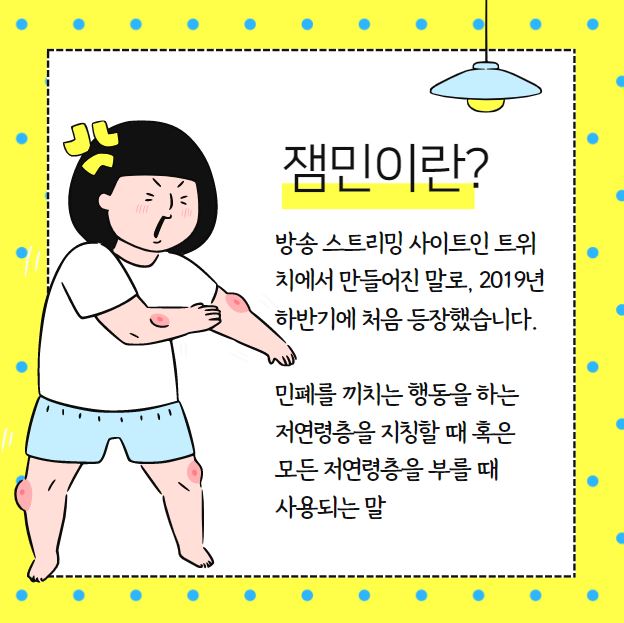
The term originated on the streaming platform Twitch and is said to have first appeared in the second half of 2019. It is used to refer to younger children who engage in inconsiderate or troublesome behavior, or sometimes to refer to young children in general. On Twitch, a donation platform called Toonation can be used, and it is known for reading short comments aloud in various TTS (text-to-speech) voices. The term appears to derive from "Jaemin," the name of a young boy's voice used in the TTS system. Apparently, a streamer's younger cousin appeared on one of their broadcasts, and the operators worked with the streamer and the cousin to create a TTS model based on the cousin's voice. The name "Jaemin" was chosen by reversing the cousin's real name, "Minjae." The distinctive intonation of this TTS voice became popular and was widely used on Twitch. By adding the prefix "jaem-" (잼-), meaning fun or funny, the term "jaemin-i" was coined. Originally used as the name of a TTS voice on Toonation, the meaning of jaemin-i gradually shifted to refer to younger age groups. Today, it is more widely known as a derogatory term for elementary school students. Previously, terms like "gaechoding," "chogling," and "geupsikcheong" were commonly used to describe young elementary students behaving badly, but jaemin-i has largely replaced them. Originally, "Jaemin-i" (재민이, written differently) referred to ordinary young children, while "Jaemin-i" (잼민이) referred specifically to those who acted without manners — but over time, the latter became more dominant and the two meanings merged. The term is also sometimes used to describe people who act immature for their age, or those who look younger than they are. As the meaning of jaemin-i became more derogatory, concerns have been raised about its impact. A survey by the Green Umbrella Children's Foundation found that 7 out of 10 children feel uncomfortable being called jaemin-i.
Words Similar in Meaning to Jaemin-i
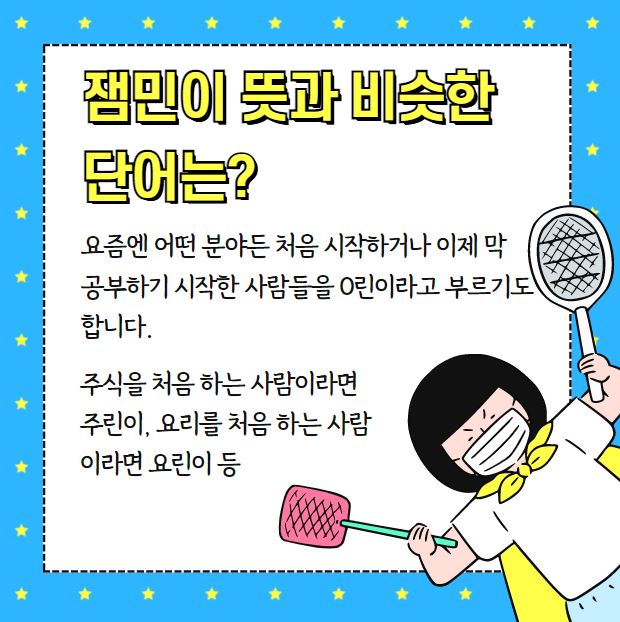
Nowadays, people who are just starting out in any field are sometimes called "O-rini" (O린이), a playful blend of the target activity and "children" (어린이). For example, someone new to stocks might be called "jurini" (주린이), and someone new to cooking might be called "yorini" (요린이). It is true that elementary school students have not yet attained a high social standing and lack life experience. As a result, they tend to be very curious, and in that process, they sometimes act in ways that go beyond common sense due to an undeveloped sense of social etiquette or moral standards. At the same time, their speech patterns — which can feel disruptive or irritating to others — are also factors that may prompt people to label them "jaemin-i." However, no matter how one feels, it is not appropriate adult behavior to mock immature young children or subject them to excessive ridicule. Adults have a responsibility to guide children, who still have much to learn and experience, toward the right path.
Alternative Words to Use Instead of Jaemin-i
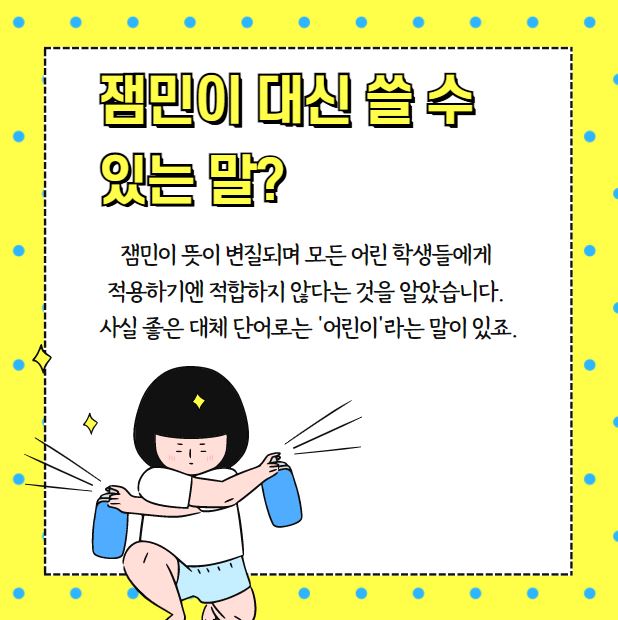
As the meaning of jaemin-i has become distorted and no longer appropriate to apply to all young students, it is worth considering better alternatives. One such alternative is the word "children" (어린이) in its respectful form. This word is said to have been coined by Bang Jeong-hwan, a children's rights pioneer. In 1923, he created the first Children's Day to establish a day on which children would be treated with even greater respect than adults — a concept quite different from how children were regarded at the time. The word "children" (어린이) in the Korean Dictionary is defined as a respectful way of referring to young children, carrying a sense of dignity and honor. Let us hope that the adults around our children can create an environment where young people grow from healthy, well-grounded children into outstanding adolescents — before it is too late to course-correct. Perhaps the easiest place to start is by leading the way in shaping a healthier internet culture. Now that you know what jaemin-i means, what are your thoughts?
Key Checks First
When elementary school-aged kids are called "jaemin-i," they reportedly snap back with "I'm not a jaemin-i! You are!" So what exactly does jaemin-i mean, and why does it make kids so upset? Let's explore its origins step by step. Readers looking for What Does "Jaemin-i" Mean? usually need both the immediate steps and a fallback path when something fails. Use the checklist below before changing an account setting, submitting a request, or relying on a third-party guide.
Before You Start
| Item | What to check |
|---|---|
| Official channel | App, website, customer center, government site, or service portal |
| Verification | Login, phone verification, certificate, or two-factor authentication |
| Timing | Instant change, same-day processing, or business-day delay |
| Cost | Fee, auto-renewal, refund window, or cancellation condition |
| Records | Confirmation number, screenshot, email, or text message receipt |
Troubleshooting Order
- Recheck the current official app or website before following an old screenshot.
- If the menu name has changed, search inside the service with the core keyword.
- For verification errors, update the app, clear browser cache, and try another browser.
- For payment, refund, cancellation, or account deletion, save the completion screen.
- If support is needed, include the date, payment method, device, and exact error message.
Important Notes
Convenience services often change menu names, verification flows, and refund rules. Treat old screenshots as references, not final instructions. For irreversible actions such as cancellation, refund requests, account deletion, or official applications, confirm the current policy before pressing the final button.
For related everyday guides, browse the tips list. If the topic involves money, fees, interest, or taxes, the calculator hub can help with follow-up math. For policy or market updates, check the news section.
Frequently Asked Questions
Which should I follow if the app and website show different steps?
Use the current official screen for the service you are logged into. For payments, refunds, and cancellations, also check the latest terms or customer-center notice before final confirmation.
What should I do if verification keeps failing?
Update the app, try a different browser, clear cache, and retry phone or identity verification. If the same error repeats, save the message and contact support with the exact time and device.
What proof should I keep after completing the process?
Keep the confirmation number, completion screen, email, text message, and payment or cancellation record. These records help if you need to prove the request later.
Are older guides still reliable?
They can explain the general idea, but the current official page should be treated as the source of truth. Menu names and policies change, so confirm the latest screen before acting.
Additional Tips
- Consult a professional for accurate information
- Please contact the relevant organizations for more details
Time calculators to use next
Continue with calculators for h:m:s arithmetic, work hours, sleep planning, presentation timing, and world time.
Apply this to your portfolio
Calculate the optimal weights with the rebalancing calculator
Go to Rebalancing CalculatorHave any questions?