Unemployment Benefits Eligibility Conditions
After getting a job, I had been working steadily at just one company, so I remember not even knowing that something called unemployment benefits existed.
After getting a job, I had been working steadily at just one company, so I remember not even knowing that something called unemployment benefits existed.
Key Overview
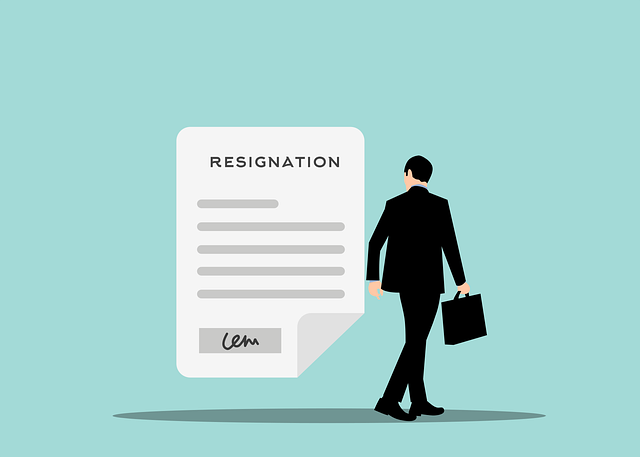
However, after recently receiving a recommendation to resign and leaving my company, a friend told me that I would qualify for unemployment benefits and that I should definitely apply. It was only then that I learned such a system existed. I decided to write this piece hoping that you too would take this opportunity to properly understand the eligibility conditions for unemployment benefits and the benefit period. With the recent economic downturn, many people find themselves unemployed against their will. I think it would be very helpful to make use of this system. First, unemployment benefits refer to a certain amount of pay provided to workers enrolled in employment insurance while they are engaged in job-seeking activities after losing their job. Although unemployment can cause anxiety about making a living, this system is designed to help overcome that financial insecurity and support stability to encourage re-employment opportunities.
Detailed Explanation
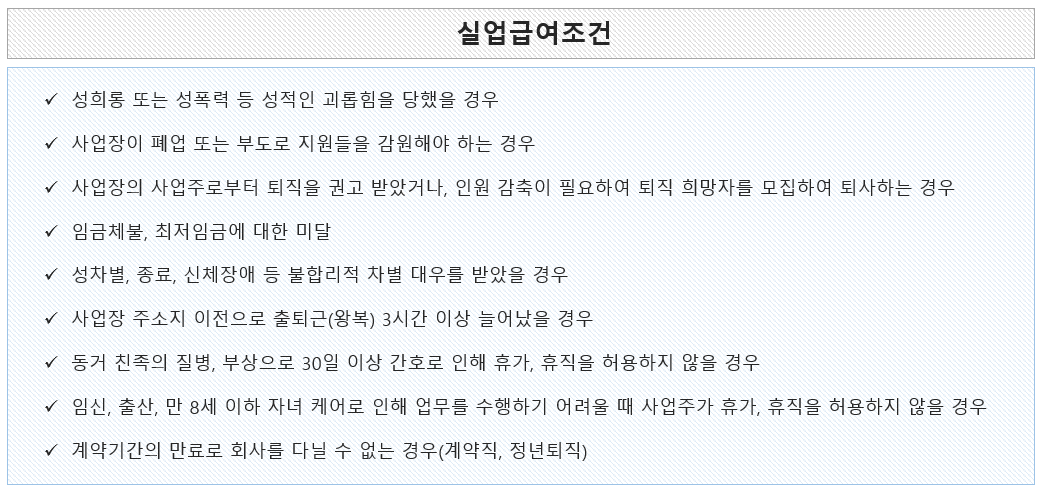
That is what this system is about. However, not everyone who loses their job can apply for this system, so it is advisable to first check the unemployment benefit eligibility conditions and only apply if you qualify. The conditions for receiving unemployment benefits include: first, the insured unit period within 18 months prior to the date of separation must be at least 180 days in total. Additionally, you must be in a state of unemployment despite having the will and ability to work. Furthermore, you must be making efforts to find re-employment, and the reason for leaving must be involuntary in order to meet the eligibility conditions and apply. For ultra-short-hour workers, the reference period is 24 months prior to the date of separation, so please keep that in mind. Also, as mentioned earlier, only those who are unemployed for involuntary reasons can apply,
How to Use

so those who voluntarily resign for personal reasons are understood to not meet the unemployment benefit eligibility conditions. However, if a worker tried to avoid changing jobs but was forced to do so due to the employer's circumstances, they may still qualify for unemployment benefits. Also, if you were dismissed due to your own fault, you will not be able to receive unemployment benefits, so cases of abuse are considered to be very rare. There may be cases where people deliberately get themselves laid off to meet the eligibility conditions and then apply, but the benefit conditions are well designed to prevent such abuse. And even if you become unemployed but do not meet the eligibility conditions for unemployment benefits, the employment insurance contributions you have paid so far are not lost.
Additional Information

If you successfully find re-employment within 3 years, your previous contributions will also be added together when you next receive unemployment benefits, meaning there is a possibility you may receive more in unemployment benefits. For those aged 50 or older, or those with disabilities, if you have been enrolled for less than 1 year, you can receive benefits for 120 days. If enrolled for 1 year or more but less than 3 years, it is 180 days; 3 years or more but less than 5 years, 210 days; 5 years or more but less than 10 years, 240 days; and 10 years or more, 270 days. For reference, the age used to determine the unemployment benefit period is based on your full age (Korean age calculation) at the time of resignation. If you meet the conditions and apply for unemployment benefits, but subsequently develop an illness or injury that affects your ability to re-enter the workforce, you may choose to extend the benefit period by the same duration or receive injury and illness benefits.
Advanced Details

If you choose to extend, it is understood that the maximum extension is up to 4 years. To qualify for an extension, it must be difficult to find re-employment due to your own illness or injury, or due to the illness or injury of a spouse or direct lineal relative, or for reasons such as the overseas assignment of a spouse. If benefits are received separately for these reasons, they can be provided in a total of three categories. In the case of training extension benefits, recipients of job-seeking benefits who are taking vocational ability development training as directed by the head of the employment security agency can receive an amount equivalent to 100% of the job-seeking benefit amount. Individual extension benefits, on the other hand, are for recipients in difficult employment situations and are paid at approximately 70% of the job-seeking benefit amount only to those judged to need livelihood support based on wage level, property status, and whether they have dependents.
Reference Notes

In the case of special extension benefits, when certain conditions such as a surge in unemployment occur, the Minister of Employment and Labor sets a specific period, and only those whose job-seeking benefits have ended within this period receive approximately 70% of the job-seeking benefit amount. After learning about this, I immediately applied for unemployment benefits and received support for about 6 months. Being able to set aside the burden of livelihood stability while conducting job-seeking activities was a great relief, and I hope many of you will make use of this system.
Key Checks First
After getting a job, I had been working steadily at just one company, so I remember not even knowing that something called unemployment benefits existed. Readers looking for Unemployment Benefits Eligibility Conditions usually need both the immediate steps and a fallback path when something fails. Use the checklist below before changing an account setting, submitting a request, or relying on a third-party guide.
Before You Start
| Item | What to check |
|---|---|
| Official channel | App, website, customer center, government site, or service portal |
| Verification | Login, phone verification, certificate, or two-factor authentication |
| Timing | Instant change, same-day processing, or business-day delay |
| Cost | Fee, auto-renewal, refund window, or cancellation condition |
| Records | Confirmation number, screenshot, email, or text message receipt |
Troubleshooting Order
- Recheck the current official app or website before following an old screenshot.
- If the menu name has changed, search inside the service with the core keyword.
- For verification errors, update the app, clear browser cache, and try another browser.
- For payment, refund, cancellation, or account deletion, save the completion screen.
- If support is needed, include the date, payment method, device, and exact error message.
Important Notes
Convenience services often change menu names, verification flows, and refund rules. Treat old screenshots as references, not final instructions. For irreversible actions such as cancellation, refund requests, account deletion, or official applications, confirm the current policy before pressing the final button.
For related everyday guides, browse the tips list. If the topic involves money, fees, interest, or taxes, the calculator hub can help with follow-up math. For policy or market updates, check the news section.
Frequently Asked Questions
Which should I follow if the app and website show different steps?
Use the current official screen for the service you are logged into. For payments, refunds, and cancellations, also check the latest terms or customer-center notice before final confirmation.
What should I do if verification keeps failing?
Update the app, try a different browser, clear cache, and retry phone or identity verification. If the same error repeats, save the message and contact support with the exact time and device.
What proof should I keep after completing the process?
Keep the confirmation number, completion screen, email, text message, and payment or cancellation record. These records help if you need to prove the request later.
Are older guides still reliable?
They can explain the general idea, but the current official page should be treated as the source of truth. Menu names and policies change, so confirm the latest screen before acting.
Additional Tips
- Please consult a professional for accurate information
- For more detailed information, please contact the relevant authorities
Time calculators to use next
Continue with calculators for h:m:s arithmetic, work hours, sleep planning, presentation timing, and world time.
Apply this to your portfolio
Calculate the optimal weights with the rebalancing calculator
Go to Rebalancing CalculatorHave any questions?