Hourly Wage Calculator
Many people today work part-time or hourly jobs. Whether you are a student working to cover tuition and living expenses or a shift worker, calculating your exact pay can be more complex than it seems — especially when weekly allowances and overtime are involved.
Many people today work part-time or hourly jobs. Having worked various part-time jobs myself during college to cover tuition and living expenses, I remember that calculating pay was always my biggest question. Figuring out how much I should receive for a given number of hours worked in a day, or totaling up a month of hours to get a monthly wage, turned out to be more complicated than expected.
Overview

That is why this article takes a close look at the hourly wage calculator. An hourly wage calculator is a useful tool that computes pay based on an employee's hourly rate and the number of hours worked. It is particularly essential for part-time workers and shift employees.
1. What Is a Hourly Wage Calculator and Why Do You Need One?
The biggest reason to use an hourly wage calculator is accurate pay calculation. Manual calculations are prone to mistakes, and when additional items such as weekly holiday allowances or overtime pay are factored in, the math becomes even more complex. Using an hourly wage calculator automates all of these complicated calculations, making the process much more convenient. Accurate pay calculation is also the first step in protecting workers' rights. Many part-time employees do not know exactly how much they should be paid and end up losing out. A wage calculator helps prevent such situations.
Detailed Explanation

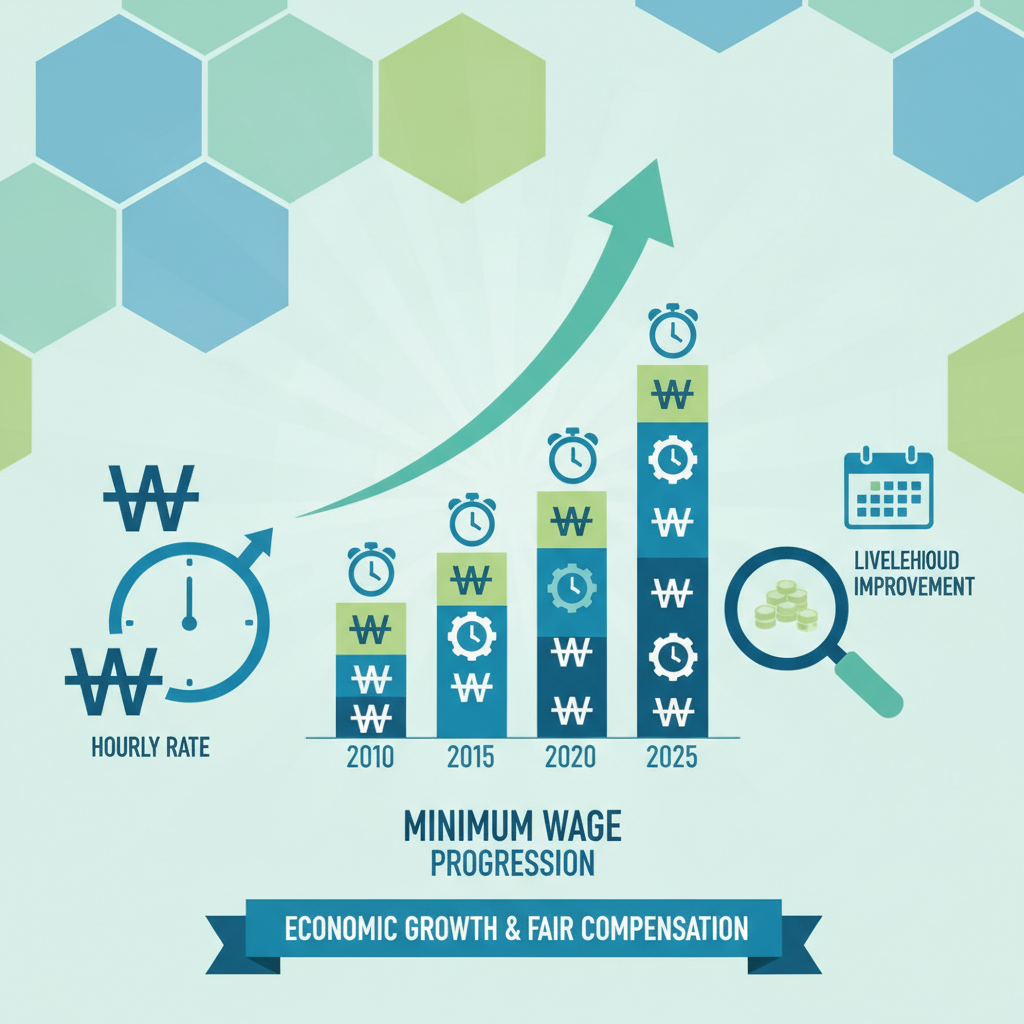
2. What Is the 2025 Minimum Wage and How Is It Applied?
As of 2025, South Korea's minimum wage continues to rise. The minimum wage is the legally mandated minimum hourly pay set by the government; employers are prohibited from paying less than this amount. Therefore, when using a wage calculator it is important to first confirm the current minimum wage. The minimum wage is announced annually by the Ministry of Employment and Labor, taking into account factors such as the prior year's economic growth and inflation rate. All employers are obligated to pay at least the minimum wage. If you are receiving less than the minimum wage, that is a clear violation of the law and you should demand a correction.
3. How Do You Use a Hourly Wage Calculator?
Using an hourly wage calculator is very straightforward. Simply enter your hourly rate and the number of hours worked, and your pay is calculated automatically.
How to Use

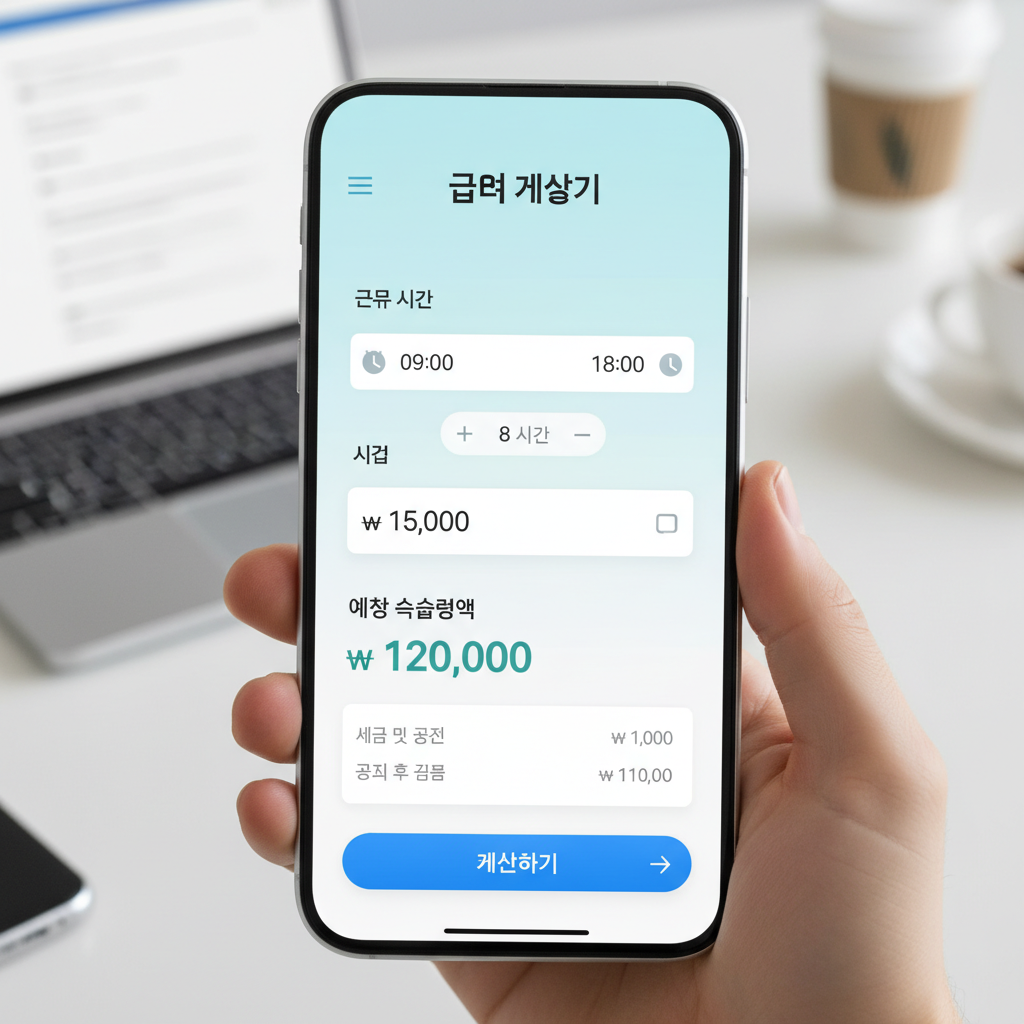
Most hourly wage calculators support various calculation modes — daily hours, weekly hours, and monthly hours. Recent calculators feature intuitive user interfaces that anyone can use with ease. Simply enter basic information such as your hourly rate, daily working hours, and number of working days per week to instantly see your estimated pay. Some calculators even automatically calculate total working hours when you enter your start and end times.
4. What Is the Weekly Holiday Allowance and How Is It Calculated?
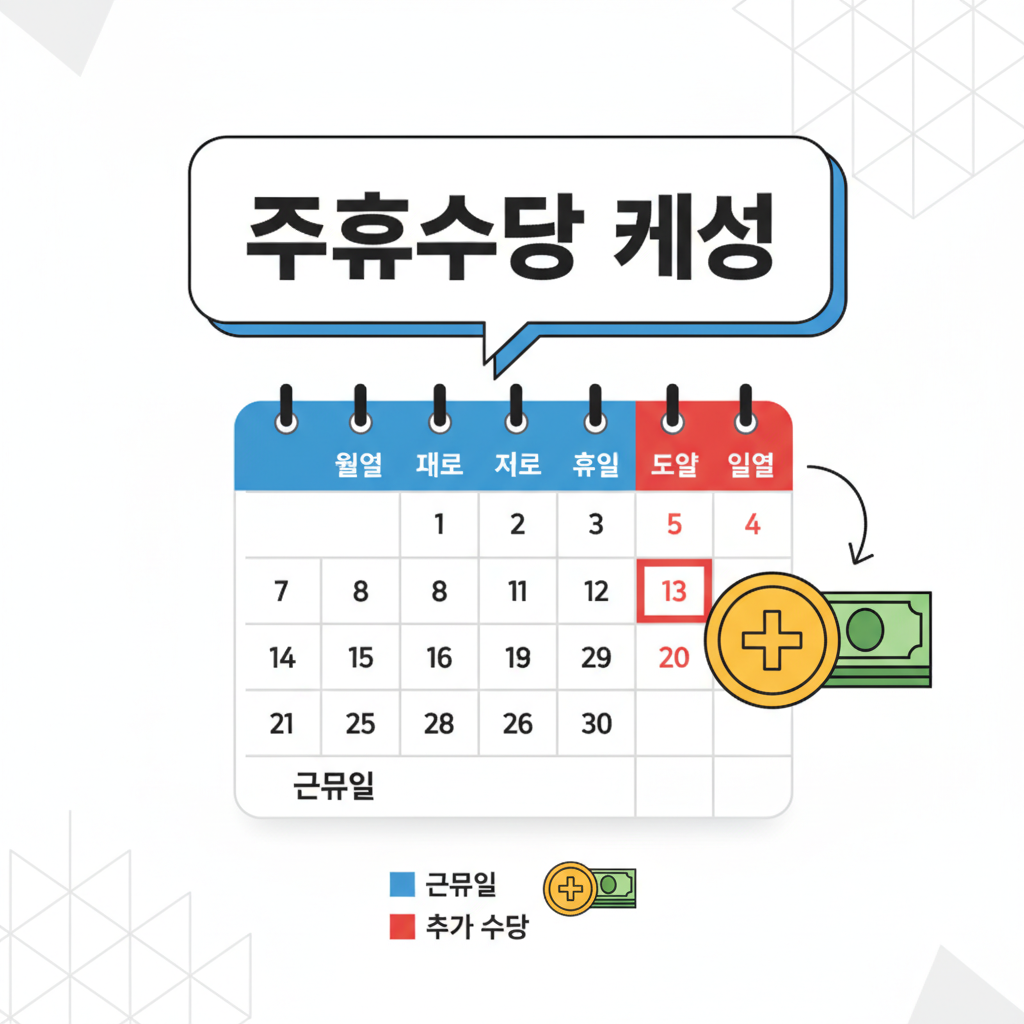
One particularly important item to be aware of is the weekly holiday allowance (주휴수당). This paid-holiday allowance is given to workers who have worked 15 or more hours per week and attended every scheduled shift. It equals one additional day's wages on top of regular pay. Many part-time workers are unaware that this allowance exists and lose out as a result. An hourly wage calculator handles the weekly holiday allowance calculation automatically.
Additional Information
The weekly holiday allowance is calculated as follows: divide the total hours worked in the week by the number of working days to find the average daily hours, then multiply by the hourly rate. For example, if you worked 5 days a week, 4 hours each day (20 hours total), you would receive a weekly holiday allowance equivalent to 4 hours of pay. This is an important right that every worker should claim.
5. How Are Overtime and Night-Shift Pay Applied?
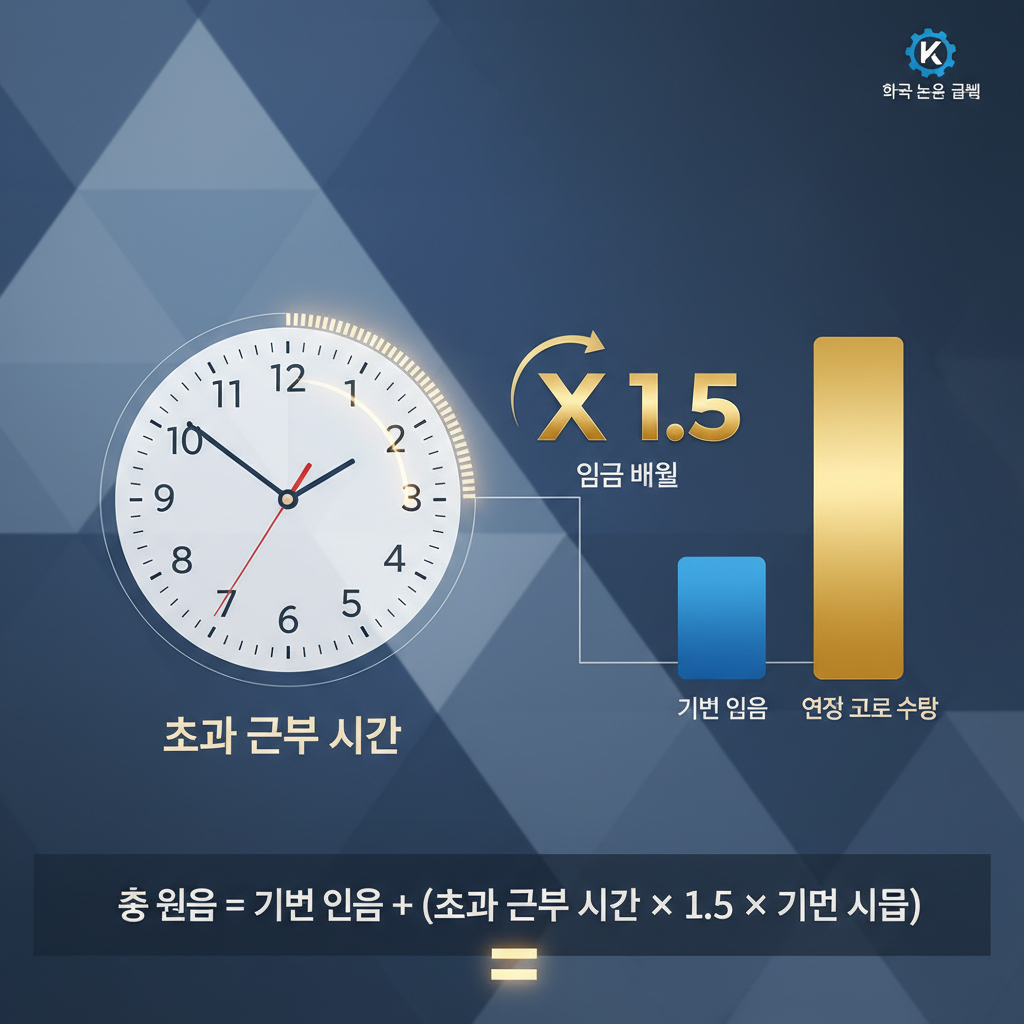
Overtime pay is another crucial factor. Working more than 8 hours in a day or more than 40 hours in a week entitles you to 1.5 times your regular hourly rate. Night-shift and holiday work also generate additional allowances, and an hourly wage calculator handles all of these complex calculations automatically. Night-shift pay applies to work performed between 10 p.m. and 6 a.m., adding an extra 0.5 times the regular hourly rate.
In-Depth Content
Holiday work pays 1.5 times the regular rate for the first 8 hours and double for any hours beyond that. If you work overtime on a holiday night, overtime pay and night-shift pay stack, resulting in double the regular hourly rate.
6. How Can You Estimate Your Monthly Pay in Advance?
Using a wage calculator, you can project your expected monthly pay before you begin working. Calculating in advance how much you would earn by working a certain number of hours per day over a given number of days per week can be a great help in financial planning. For students who need to balance studies and part-time work, time management is critical. A wage calculator lets you work backwards from a target income to find out how many hours you need to work, which can also help with academic planning. For instance, if you need 1,000,000 KRW per month, you can enter your hourly rate and available hours to check whether the goal is achievable.
Notes
7. Why Do Employers Also Need a Wage Calculator?
From an employer's perspective, a wage calculator is equally useful. Calculating and paying wages accurately prevents legal disputes and maintains a transparent pay structure. It is especially essential for small business owners who employ multiple part-time workers. Employers are obligated to comply with the Labor Standards Act. Using a wage calculator ensures that all legal requirements are met precisely. Preparing pay stubs based on pre-calculated figures also reduces the chance of errors. Transparent and accurate wage payment builds employee trust and contributes to long-term employment relationships.
8. What Should You Look for When Choosing a Wage Calculator?
There are a few things to consider when choosing an hourly wage calculator. First, confirm that it reflects the current minimum wage.
7th Info

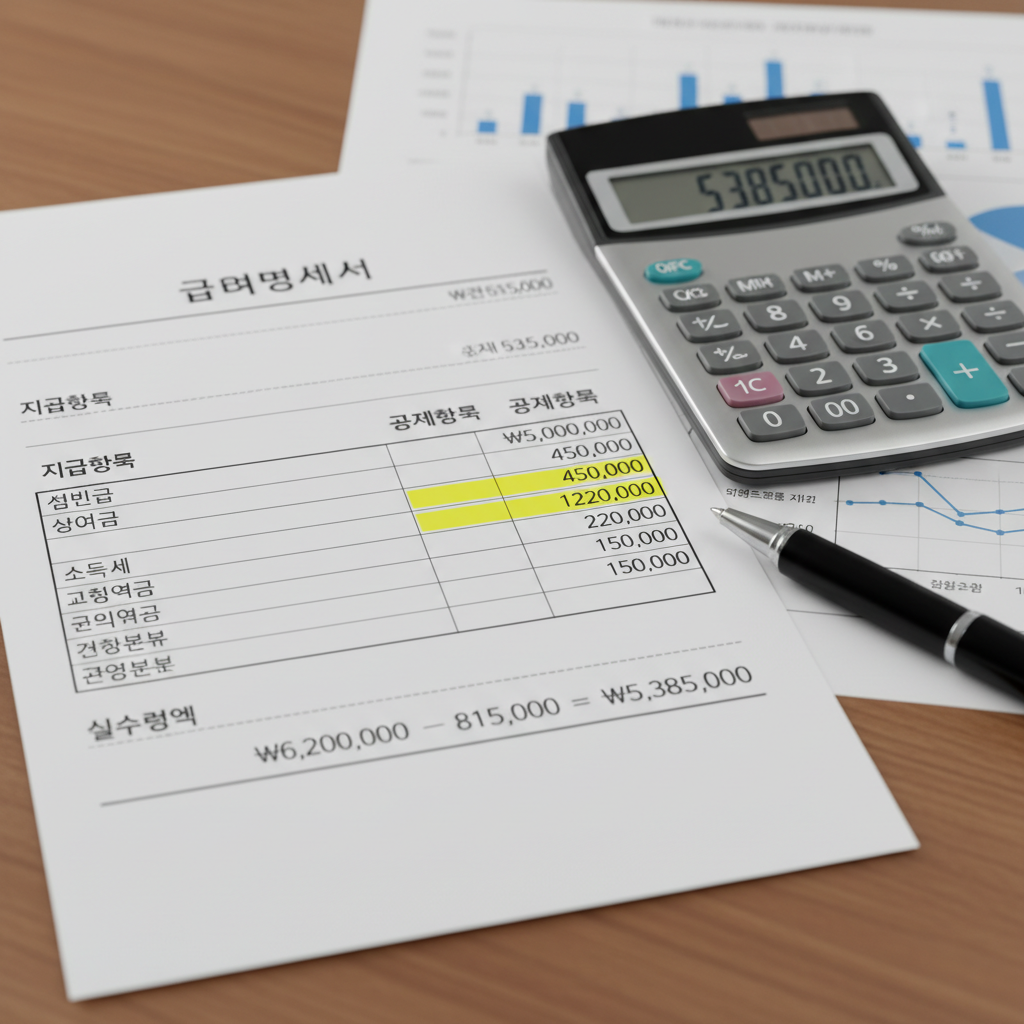
Since the minimum wage changes every year, using an outdated calculator may produce incorrect results. It is also a good idea to verify that the calculator includes functions for weekly holiday allowances, overtime pay, night-shift pay, and holiday pay. A calculator that handles these additional items is far more useful than one that simply multiplies hours by the hourly rate. Tax deduction functionality is also important. To know your actual take-home pay, you need to see the amount after deductions such as the four major social insurances and income tax. Some wage calculators provide this tax-deduction feature. Depending on your income level, you may not owe income tax at all, but it is still good to check in advance. Confirm that the calculator is easy to use on a mobile device as well. In today's smartphone-driven world, a wage calculator that is easily accessible and usable on mobile is far more convenient.
8th Info

9. What Should You Watch Out for When Using a Wage Calculator?
There are also some cautions to keep in mind. Calculator results are for reference only, and your actual wages may differ depending on your company's pay policy or individual contract terms. If there is a discrepancy between the calculator result and your actual pay, it is advisable to discuss this with your employer. In particular, daily-rate workers may have a different calculation method. If you are paid a flat daily rate rather than an hourly rate, a standard hourly wage calculator may not produce accurate results, so separate verification may be needed. Freelancers and special-employment workers may also have a different concept of hourly pay. In those cases, following the pay calculation method specific to their occupation is more accurate than using a generic hourly wage calculator. For people juggling multiple part-time jobs simultaneously, a wage calculator is still very useful. Calculating the expected income from each job and totaling them up helps with financial management.
9th Info
However, be aware that working multiple jobs may raise issues such as duplicate enrollment in the four major social insurances.
10. What Is the Future Outlook for Wage Calculators?
An hourly wage calculator is more than just a calculation tool — it is also a tool that protects workers' rights. By calculating and verifying accurate pay, workers can protect themselves from unfair treatment. Recently, with the spread of the gig economy, platform-based jobs such as delivery riders and designated drivers have also increased. Although these are typically paid per task, converting earnings to an hourly basis allows for comparison using the hourly wage concept. Wage calculators are expected to continue evolving. Integration of artificial intelligence technology will enable even more sophisticated pay calculations, and policy changes such as tax law revisions and minimum wage increases will be reflected in real time. Integration with transparent payroll systems leveraging blockchain technology is also anticipated. In conclusion, the hourly wage calculator is a useful tool for both employees and employers alike. Accurate pay calculation maintains transparent employment relationships and helps prevent legal disputes. If you work part-time or in shift employment, making use of a wage calculator is strongly recommended. At this very moment, many people are working hard. Accurately calculating and verifying the fair pay you deserve is extremely important. A wage calculator handles even the most complex pay calculations with ease, so be sure to make use of one. If you work part-time or in shift employment, try using the hourly wage calculator introduced in this article to calculate your pay accurately and receive the rightful compensation for your work. If you know friends or family who also work part-time, share the knowledge of how to use a wage calculator so that everyone can receive fair pay.
10th Info
Additional Tips
- Consult a professional for accurate information.
- Please contact the relevant authorities for more details.
Time calculators to use next
Continue with calculators for h:m:s arithmetic, work hours, sleep planning, presentation timing, and world time.
Apply this to your portfolio
Calculate the optimal weights with the rebalancing calculator
Go to Rebalancing CalculatorHave any questions?